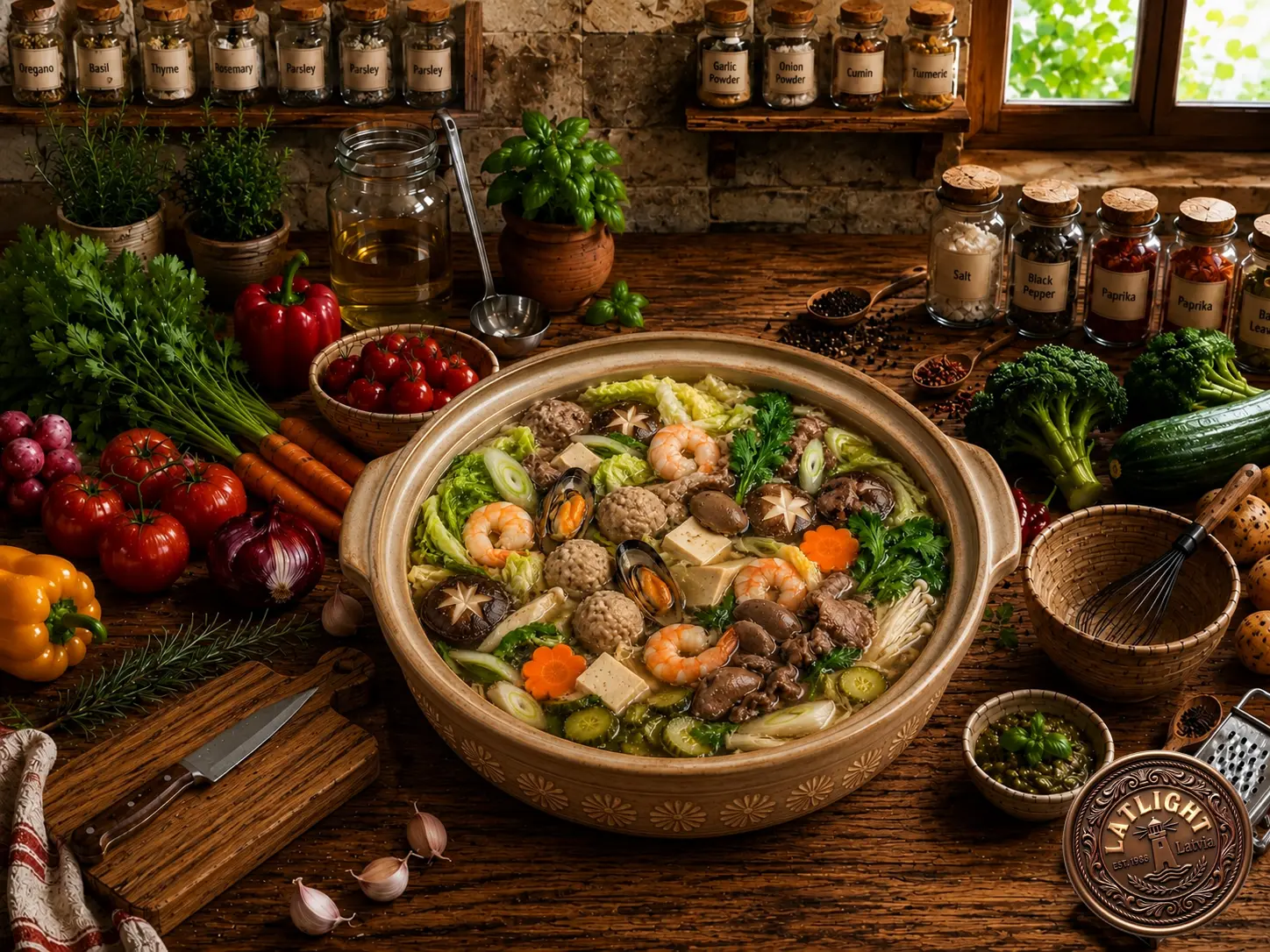
Chanko Nabe (Sumo Hot Pot)
1. Prepare the broth:
In a large heavy-bottomed pot (like a donabe),
heat a rich chicken broth infused with dashi,
a splash of soy sauce, mirin and sake.
Seasonings to taste - ginger, white/yellow miso,
garlic.
2. Prep the ingredients:
Slice the shiitake mushrooms, tofu, carrots,
and cabbage. Mix minced chicken with ginger
and green onions, then form into small meatballs.
3. Assemble:
Carefully arrange the cabbage, mushrooms,
meatballs, thinly sliced beef, fresh shrimp,
and mussels beautifully in the simmering broth.
4. Simmer & Serve:
Cover and simmer gently until the meatballs
and seafood are fully cooked. Serve straight
from the pot!
Chanko Nabe
History & OriginsChanko Nabe has a rich history and cultural significance in Japan. It is believed to have originated in the Edo period (1603-1868) when sumo wrestlers would gather around a hot pot to share a meal and bond with each other.
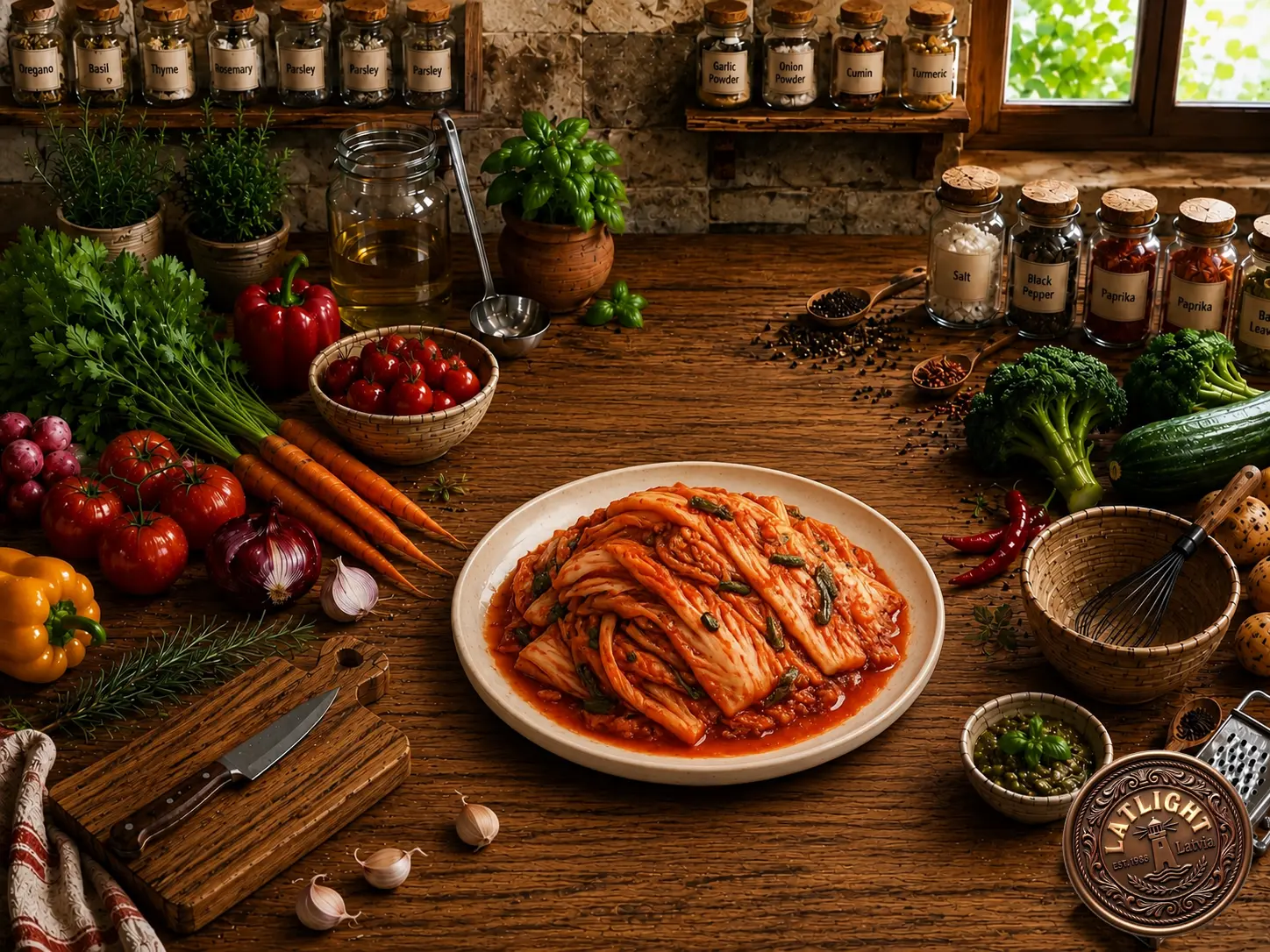
Classic Homemade Kimchi
1. Salt the cabbage:
Quarter the Napa cabbage, massage coarse sea salt
between the leaves, and let it rest for 2 hours
until wilted. Rinse thoroughly and drain.
2. Make the paste:
Blend garlic, ginger, onion, and fish sauce into
a smooth puree. Stir in the Korean red pepper
flakes (gochugaru) until a thick paste forms.
3. Combine:
Mix chopped scallions into the paste. Using gloves,
rub the spicy mixture evenly over every single
cabbage leaf.
4. Ferment:
Pack the coated cabbage tightly into a sterilized jar,
pressing down to remove air pockets. Let it ferment
at room temperature for 1 to 2 days before moving
it to the fridge.
Classic Homemade Kimchi
History & OriginsThe history of Kimchi dates back over 2,000 years to the Three Kingdoms period (around 37 BCE to 668 CE). Early forms of Kimchi were not spicy and mainly consisted of vegetables preserved in salt to survive harsh winters. These ancient fermented dishes laid the foundation for the Kimchi we know today.
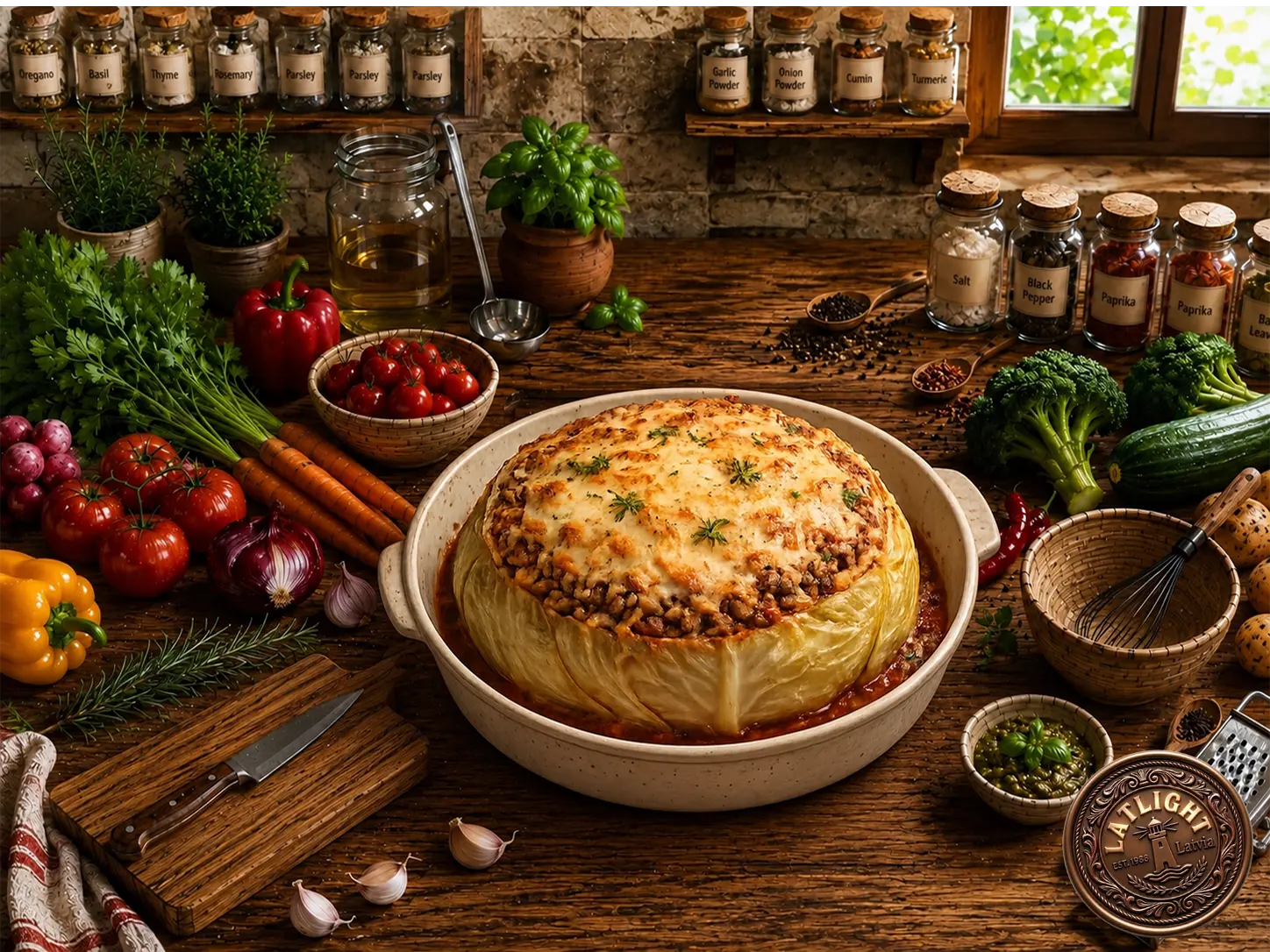
Baked Stuffed Whole Cabbage
1. Prep the cabbage:
Carefully hollow out the center of a large whole
cabbage. Parboil the cabbage in salted water for
10 minutes to soften the leaves, then drain completely.
2. Mix the filling:
In a bowl, combine ground meat, cooked rice, sautéed
diced onions, minced garlic, salt, pepper, and your
favorite herbs.
3. Stuff & Bake:
Pack the meat and rice mixture tightly into the hollowed
core of the cabbage. Place it in a deep baking dish
surrounded by rich tomato sauce. Cover and bake at
180°C for 1.5 hours.
4. Cheesy Finish:
Remove the cover, generously top the cabbage with
grated cheese, and bake for another 15 minutes until
the cheese is melted, bubbling, and golden brown.
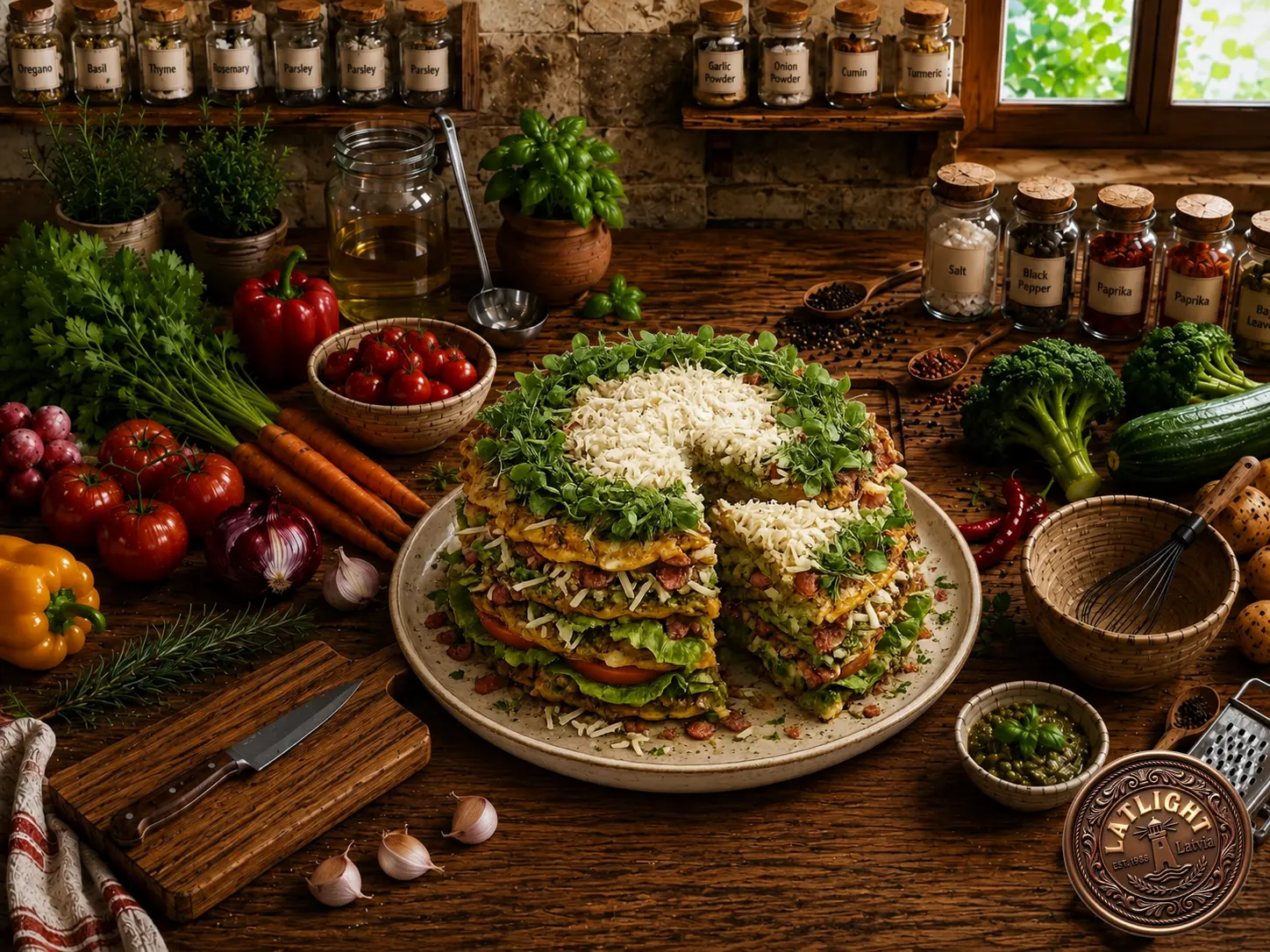
Savory Layered Potato Pancake Cake
1. Make the pancakes:
Finely grate potatoes, mix with eggs, flour and
seasoning to taste. Fry full-sized, thin pancakes
in a pan until lightly golden on both sides and set aside.
2. Prep the filling:
Slice tomatoes, crisp the chopped bacon or small
sausages, shred lettuce, and grate plenty of cheese.
3. Assemble the layers:
Build the cake layer-by-layer: place a pancake base,
spread pesto or savory sauce, top with lettuce,
sliced tomatoes, cooked bacon, and grated cheese.
Repeat until all layers are built.
4. Garnish & Serve:
Top the final layer generously with fresh microgreens,
sprouts, and extra grated cheese. Slice into cake wedges
and enjoy!
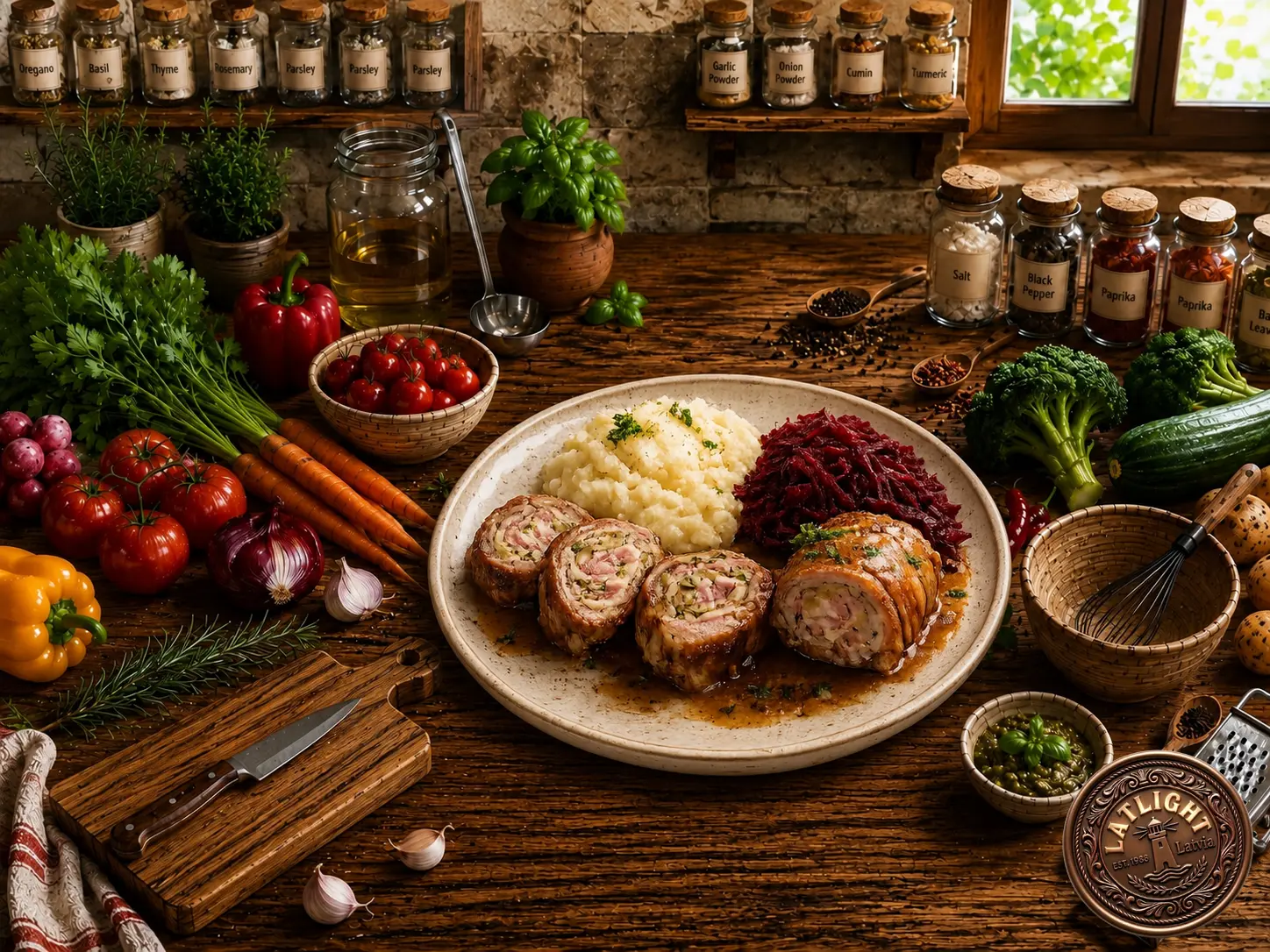
Polish Braised Beef Rolls (Zrazy)
1. Prepare the beef:
Thinly slice and pound the beef steaks until flat.
Season with salt and pepper, then spread a thin layer
of mustard over one side.
2. Fill and roll:
Place bacon strips, sliced dill pickles, and thin onion
wedges onto each steak piece. Roll tightly and secure
with kitchen string or toothpicks.
3. Sear and braise:
Heat oil in a pan and sear beef rolls until browned
on all sides. Add beef stock, bay leaves, and simmer
covered for 45-60 minutes until tender.
4. Serve:
Discard strings/toothpicks and thicken the pan gravy.
Serve warm alongside creamy mashed potatoes and
shredded cooked beet salad.
Polish Braised Beef Rolls (Zrazy)
History & OriginsZrazy emerged as a culinary creation during the Polish-Lithuanian Commonwealth between the 16th and 18th centuries, reflecting the sophisticated tastes of the nobility in this vast multi-ethnic state.
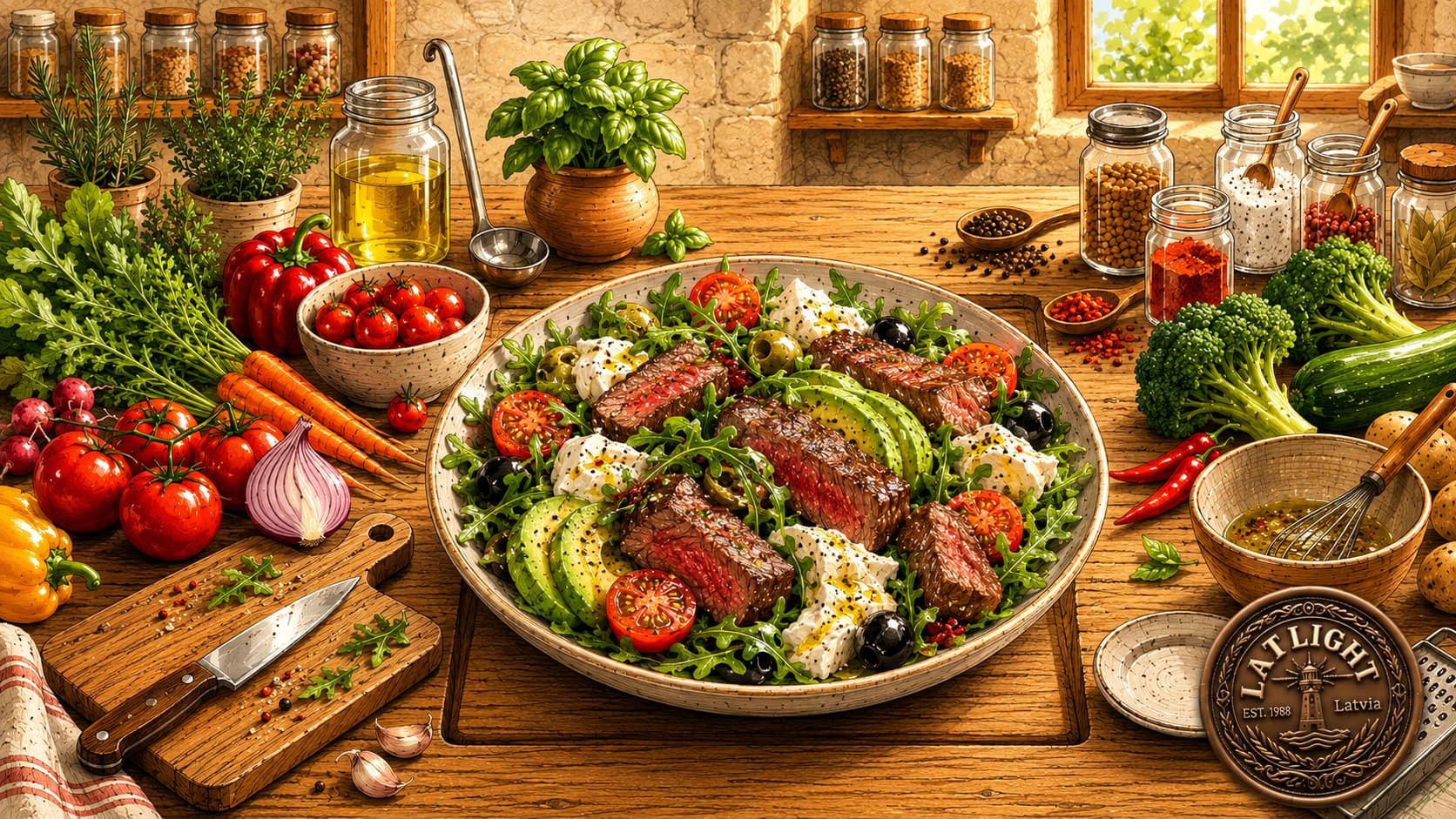
Denchik's Steak & Avocado Salad
1. Prepare the beef:
Cut the beef into uniform cubes. Sear quickly in a
hot pan until it reaches a perfect medium-rare
doneness, then set aside to rest briefly.
2. Prep the veggies:
Thoroughly wash the arugula. Dice the avocado,
cucumber, and sweet bell pepper. Halve the small
tomatoes.
3. Toss:
In a large salad bowl, combine the fresh greens,
diced vegetables, black olives, green olives,
and mozzarella chunks. Gently fold in the
medium-rare beef cubes.
4. Dress & Serve:
Drizzle generously with olive oil and season to taste
with your favorite spices. Toss gently and enjoy fresh!
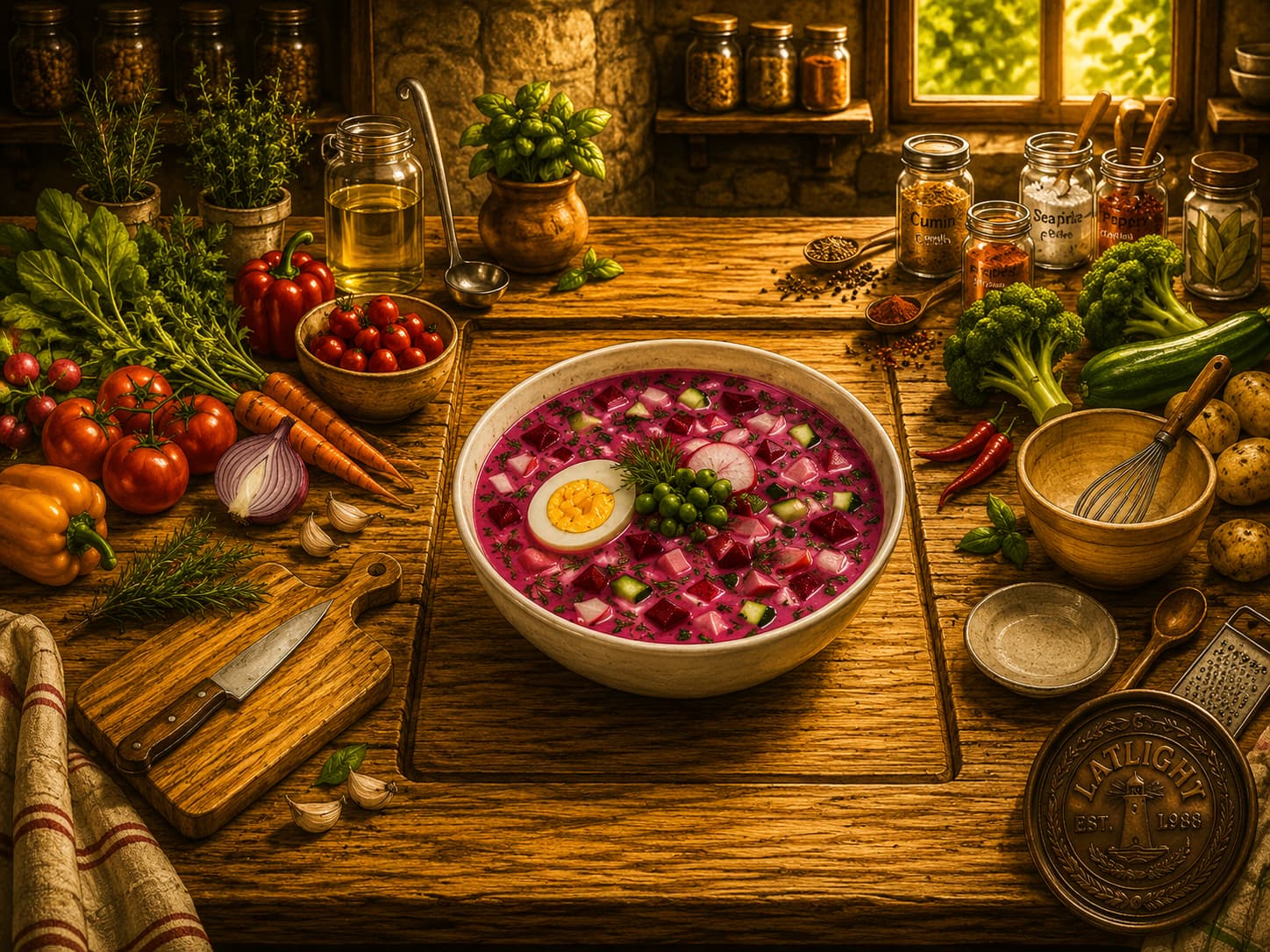
Cold Beetroot Summer Soup
1. Prepare:
Combine the grated boiled beetroot, finely diced
mortadella, grated horseradish, and grated cucumber.
Add the chopped spring onions, dill, and parsley.
2. Season:
Mix everything together with a touch of salt,
pepper, a tablespoon of mustard, and a tablespoon
of white vinegar.
3. Serve:
Pour the mixture into bowls, add the chilled kefir,
and top each serving with a halved or chopped
boiled egg. Enjoy cold!
Cold Beetroot Summer Soup
History & OriginsThe history of this unique dish dates back to the times of the Grand Duchy of Lithuania, the medieval state that at its greatest territorial extent in the 15th century stretched from the Baltic Sea to the Black Sea, encompassing what is now modern Lithuania, Belarus, much of Ukraine and parts of Poland and Russia.
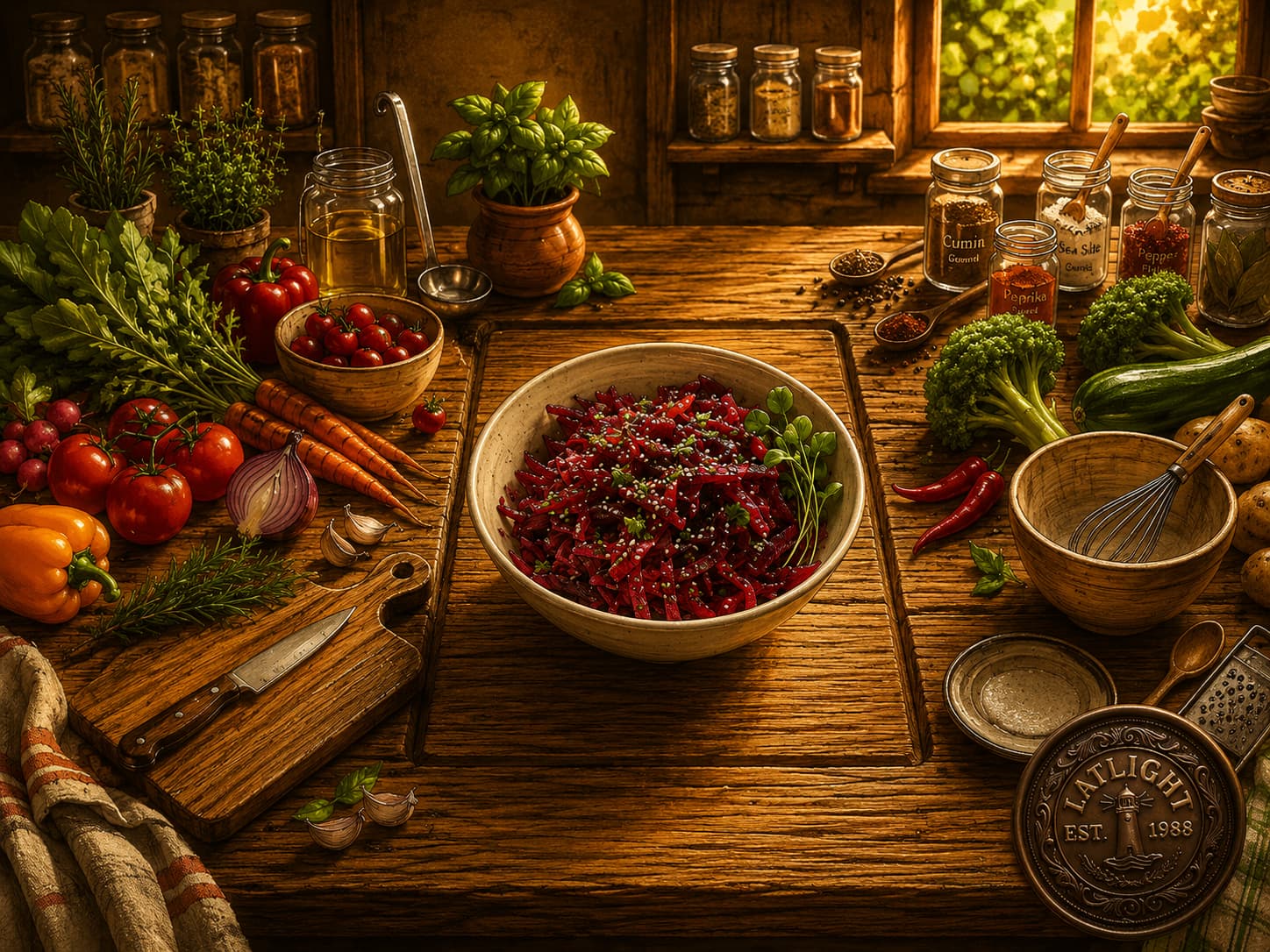
Marinated Beetroot & Cabbage Salad
1. Prepare salad:
Slice the cabbage and red onions, grate the fresh
beetroot, and add chili pepper flakes and minced
garlic to taste. Mix it all together in a bowl.
2. Prepare the marinade:
In 1 litre of filtered water, mix 100ml of white
vinegar, then add salt and sugar.
3. Combine:
Pack the salad mix into a sterile mason jar and
pour the marinade until the very top. Place the
bay leaf on top.
4. Cure:
Screw the lid on tightly and place the jar upside
down for 3 hours, then store in a cool, dry place
for 2 days. Good with all meats!
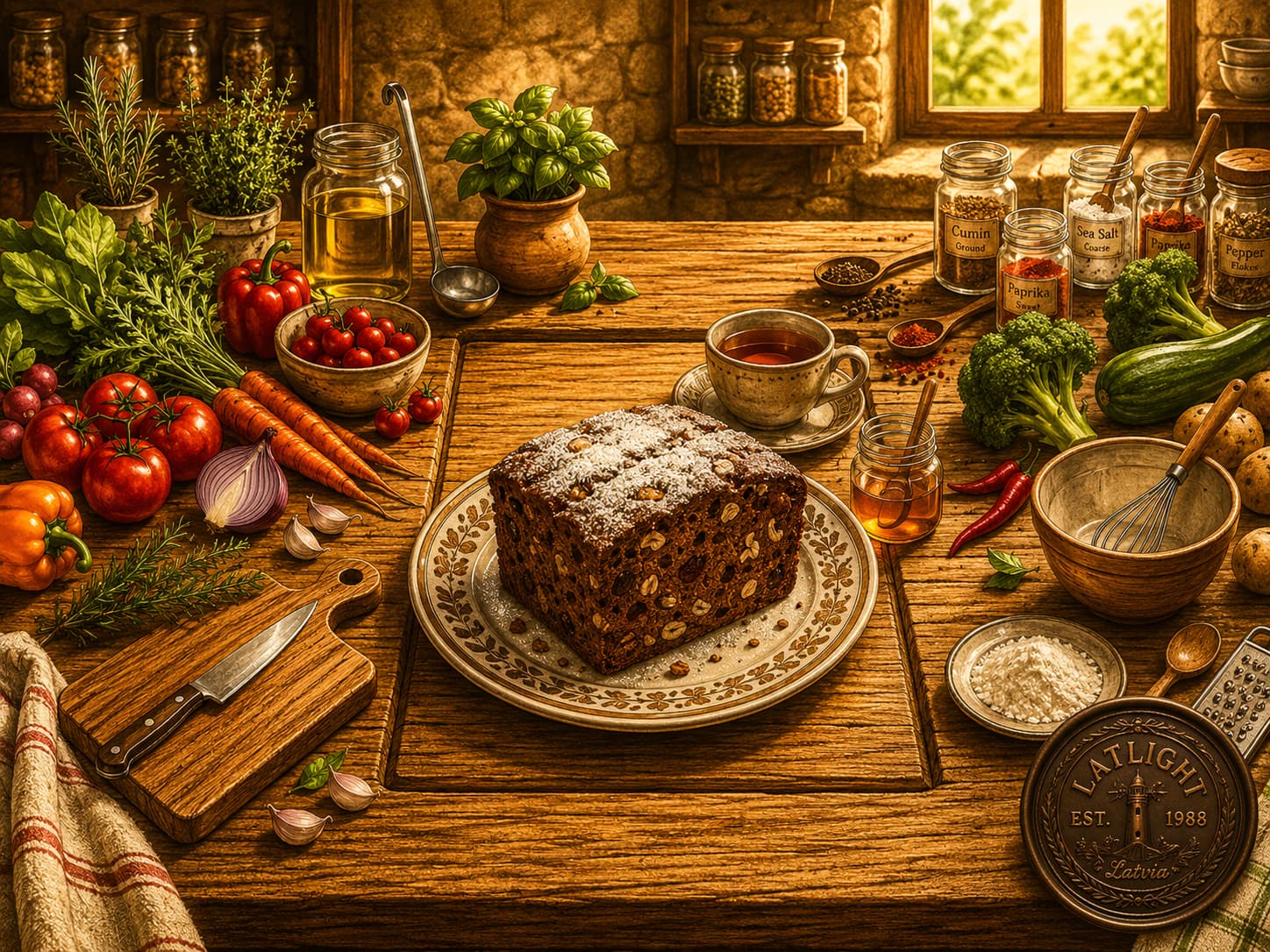
Sour Cream Cake / Kovrishka
1. Prepare the base:
Mix the baking soda into the sour cream and let
it sit for a minute to activate.
2. Mix:
Combine the sugar, eggs, butter, and jam. Add the
sour cream mixture, then stir in the flour.
3. Add-ins:
Fold in the chopped walnuts and raisins.
4. Prepare the Pan:
Grease a deep frying pan (or a cake mold) with
butter. Sprinkle the greased pan with breadcrumbs
to prevent sticking.
5. Bake:
Pour the batter into the pan. Bake on the middle
rack of the oven for 30-40 minutes.
Sour Cream Cake / Kovrishka
History & OriginsKovrizhka is a flat and tall gingerbread-like treat made from dough, with layers at least three centimeters thick, sometimes filled and sometimes not. It's one of the popular desserts in Russian cuisine, and the word 'kovrizhka' comes from 'kovrig,' which means a whole loaf of bread. The history of kovrizhki and gingerbreads in Russia goes back to the 9th century, though back then they were called honey cakes and were made from flour, honey, and berry juice. Different sources date the appearance of the word 'kovrizhka' to the 13th–15th centuries. The main ingredients of kovrizhka are flour, honey, raisins, nuts, and sugar. Often, kovrizhka has two layers of dough with a layer of jam or fruit preserves in between. The top layer of dough is covered with icing made from powdered sugar.
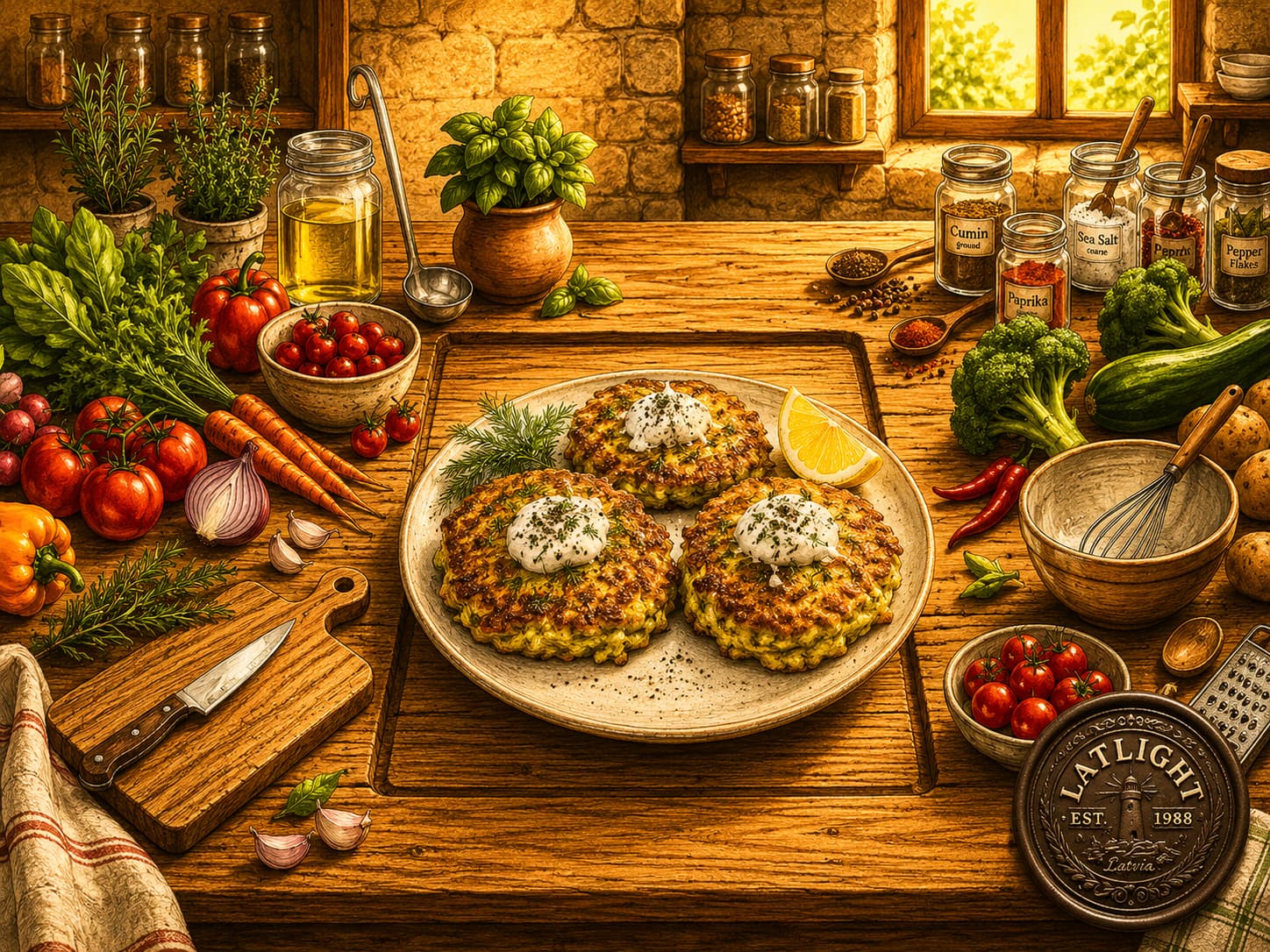
Potato Pancakes / Draniki
1. Combine:
Finely grate potatoes and onion; squeeze firmly
to remove excess moisture.
2. Mix:
Incorporate the egg, flour, and seasoning until
the batter is well-bound.
3. Shape:
Dollop generous spoonfuls of the mixture into
the hot skillet, pressing gently to form uniform rounds.
4. Fry:
Sear over medium heat until the edges are crisp
and both sides reach a deep golden brown.
Potato Pancakes / Draniki
History & OriginsDraniki can be traced back to the rural traditions of Belarus, where potatoes were first introduced in the late 18th century. Initially, this versatile tuber was met with skepticism, but it quickly became a staple in the Belarusian diet.
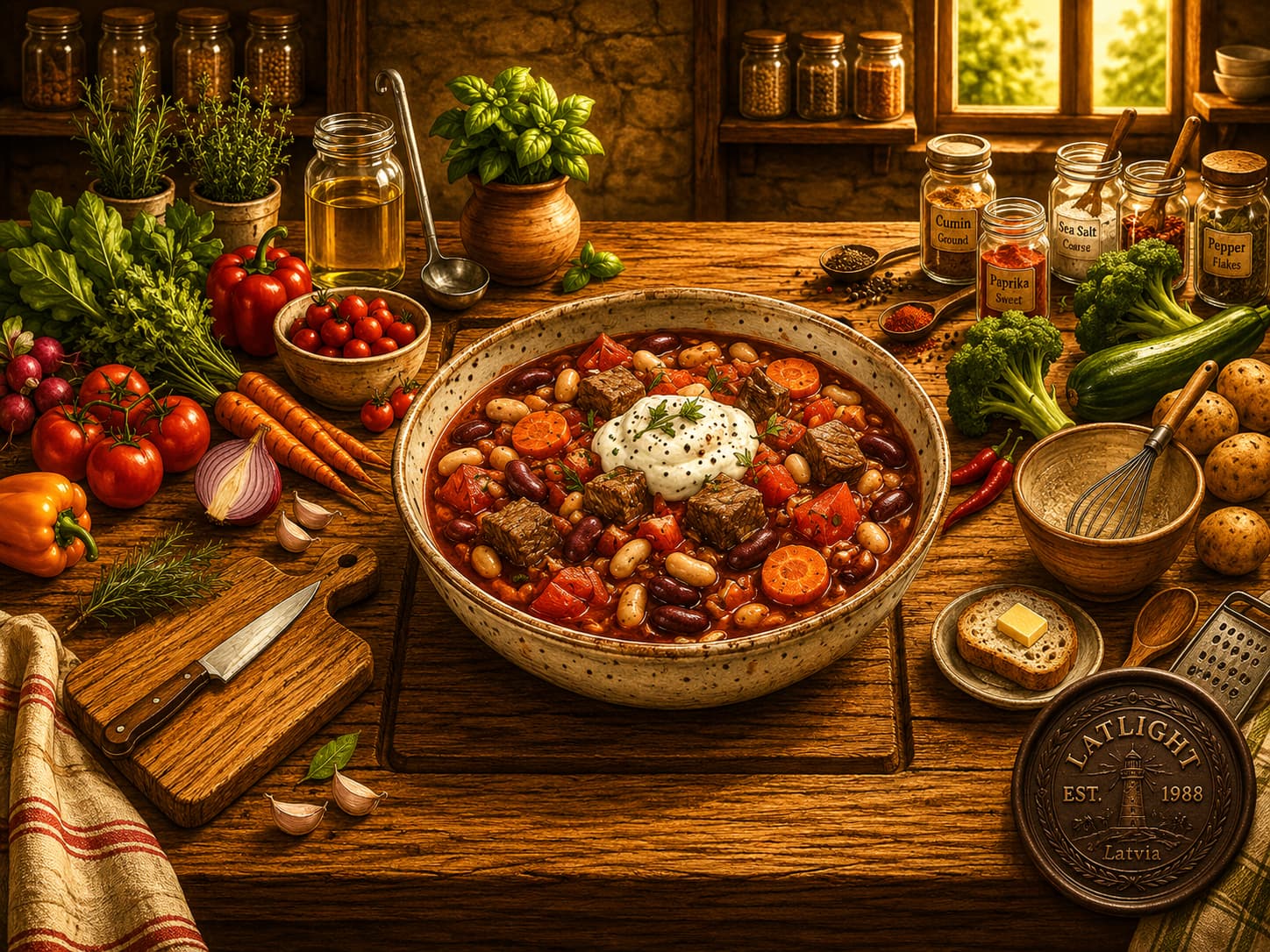
Mexican Hearty Beef & Bean Stew - Chili con carne
1. Sear:
Fry the bacon until crispy; remove and sear the beef
cubes in the remaining fat until browned.
2. Sauté:
Add diced onion, carrot, and paprika. Stir in minced
garlic, chili powder, and cumin for one minute.
3. Simmer:
Pour in tomatoes and beef broth. Season with salt
and pepper, cover, and simmer for 1 hour.
4. Finish:
Add the white and red beans. Simmer uncovered for
20-30 minutes until the beef is tender.
Mexican Hearty Beef & Bean Stew - Chili con carne
History & OriginsChili con carne originated in Mexico as 'carne con chile'—a beef-and-chili stew documented in Tenochtitlan since 1529. Spanish-introduced cattle transformed it into a ranchero staple, but its modern form evolved in Texas.

Syrniki or Quark patties
1. Combine:
Press the tvorog and banana through a sieve.
Add the egg, 3 tablespoons of flour, 4 tablespoons
of sugar, 8g of vanilla, and a pinch of salt.
2. Mix:
Mix everything until you reach a smooth,
uniform consistency.
3. Shape:
Roll the mixture into balls and coat them
(dredge) in flour.
4. Fry:
Fry in a pan over medium heat until golden brown
on both sides.
Syrniki or Quark Patties
History & OriginsThe modern form of syrniki emerged in the 19th century, gaining widespread popularity during the Soviet era as an affordable, nutritious meal using simple, everyday ingredients like tvorog, which was readily available in rural and urban households across Russia, Ukraine, Belarus, and other Slavic regions.
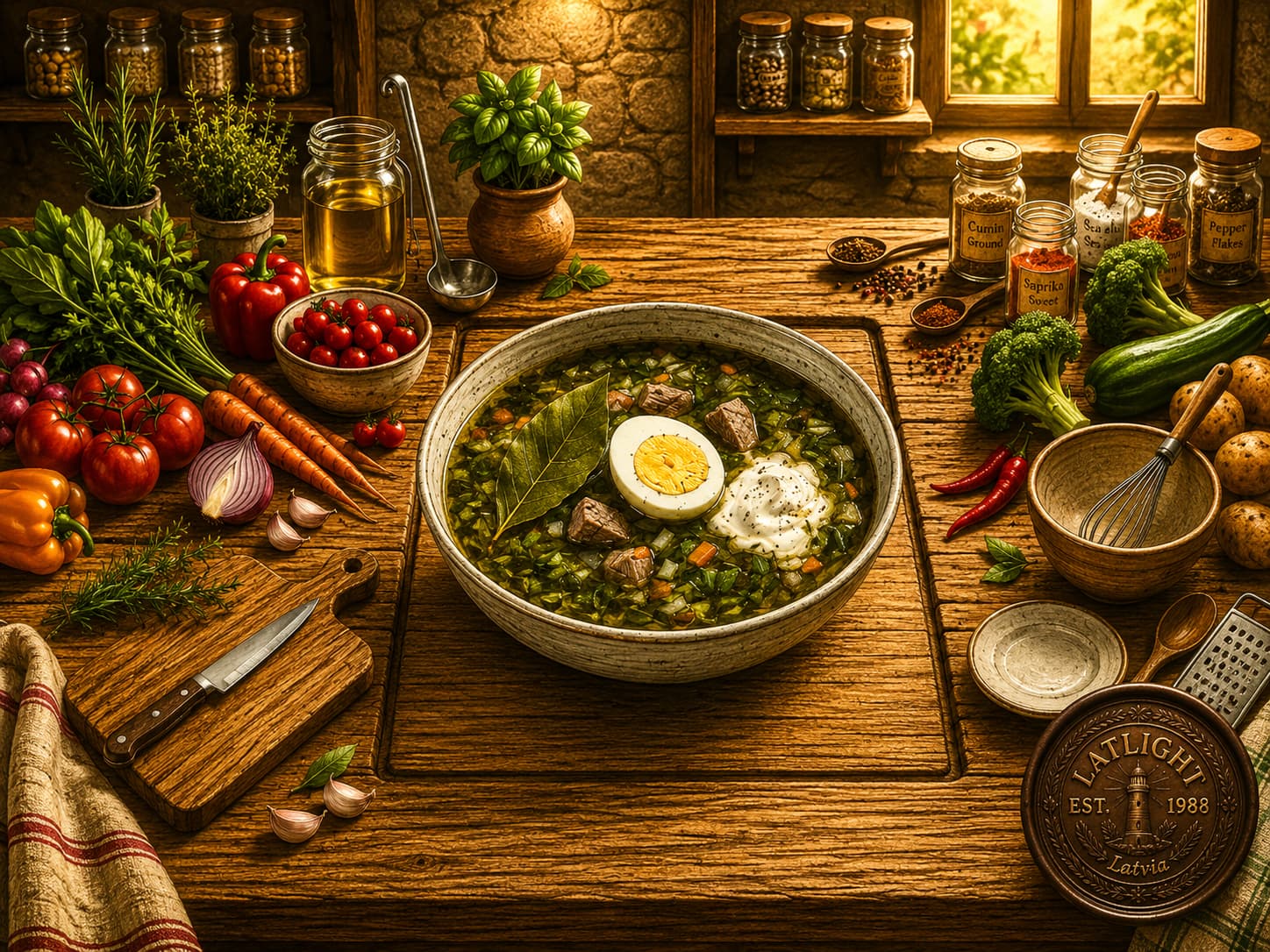
Green Shchi (Sorrel Soup)
1. Simmer the Broth:
Place the meat into 2 liters of cold water, bring to a boil, skim off any foam, and reduce the heat. Let it simmer gently for 1 to 1.5 hours until tender. Remove the meat, cut it into bite-sized pieces, and return it to the strained broth.
2. Add Potatoes & Aromatics
Bring the broth back to a simmer, add the cubed potatoes, bay leaves, and a pinch of salt.
3. Sauté the Roots:
While the potatoes soften (about 10–15 minutes), lightly sauté the chopped onions and grated carrots in a pan with a bit of butter or oil until golden and translucent, then add them to the pot.
4. Prep the Sorrel:
While the root vegetables finish cooking, wash and chop the sorrel. Steeping or wilting it slightly ahead of time helps tame its raw bite, though stirring it directly into the rolling soup at the final stage is standard.
5. The Final Melt:
Add the chopped sorrel to the pot. Let it simmer for just 3 to 5 minutes—sorrel cooks down instantly and turns an olive-green hue, releasing its signature oxalic acid tang into the broth. Taste and adjust seasoning with salt and pepper.
6. Serve:
Ladle hot into bowls, distributing chunks of tender meat, and top each portion with chopped hard-boiled eggs, fresh dill, and a generous dollop of sour cream to balance the acidity.
Green Shchi (Sorrel Soup)
History & OriginsOriginating among East Slavic tribes around the 9th century with the introduction of cabbage cultivation, shchi evolved from early liquid-based dishes into a cabbage-centric soup by the medieval period, with the first written mentions appearing as "shti" in 16th-century texts like the Domostroi, a household manual recommending it for all social classes.
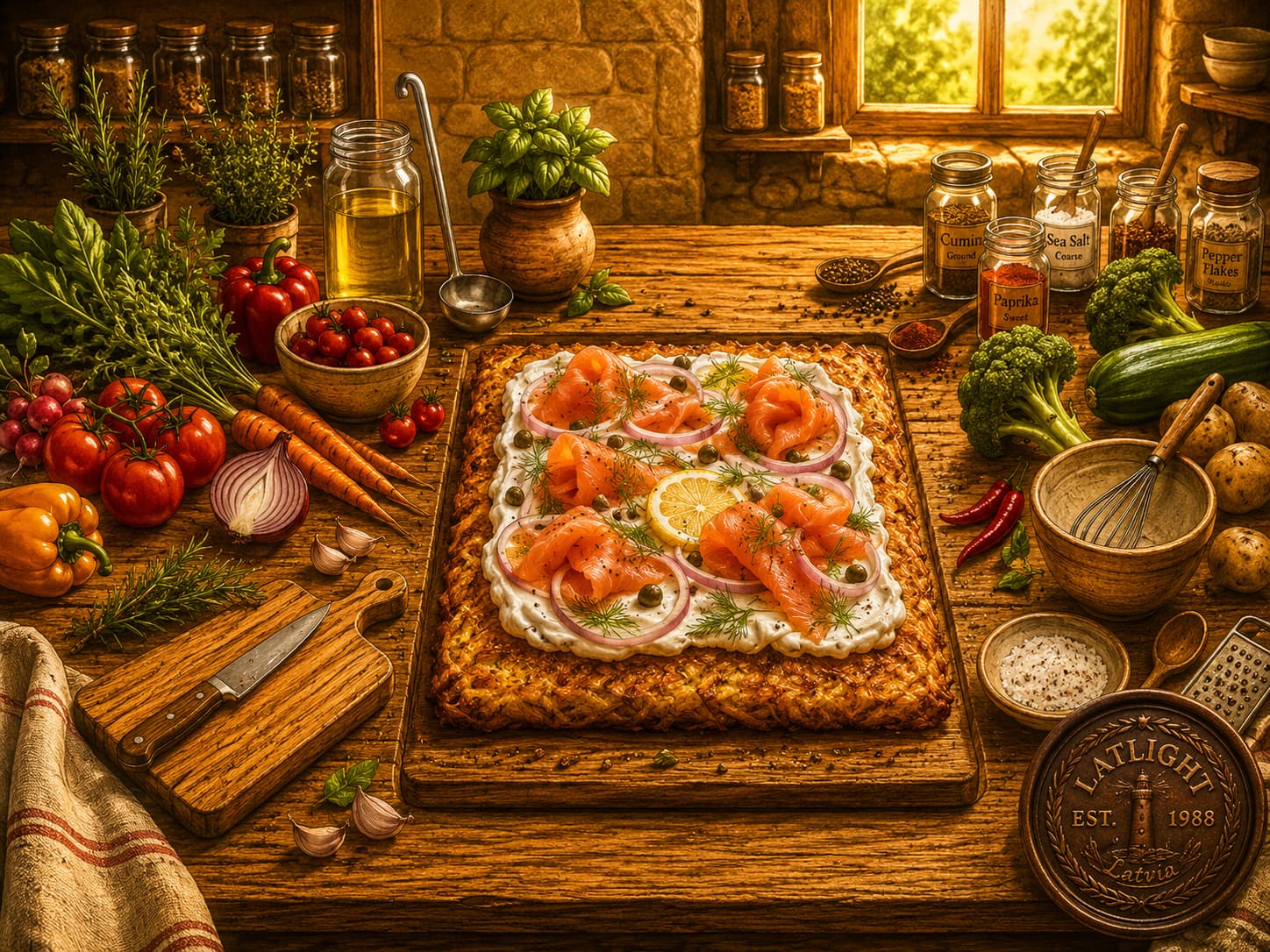
Potato Pizza with Salmon
1. Make the Crust:
Boil 1kg potatoes until tender, then mash them with the egg, oil, and flour until a workable dough forms.
2. Shape & Bake:
Shape the potato mixture into a pizza crust on a baking sheet and bake at 200°C for 20 minutes until golden.
3. Add Toppings:
Spread cream cheese over the warm crust and layer with sliced salmon.
4. Warm & Serve:
Return to the oven and warm for 5 minutes before serving.
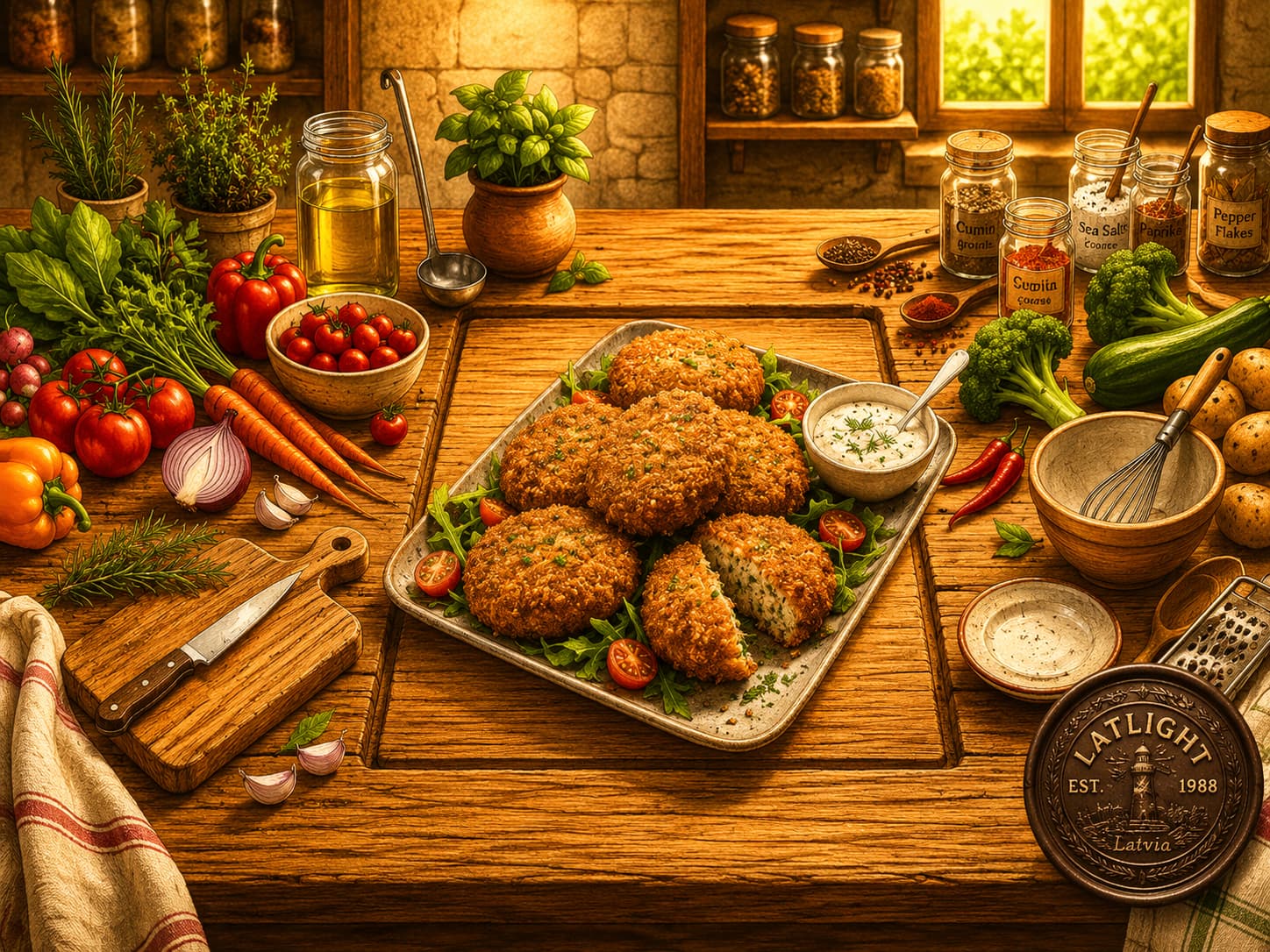
Golden Egg & Potato Patties
1. Mash Potatoes:
Mash the boiled potatoes while warm with a pat of butter until smooth.
2. Combine:
Gently fold in the grated boiled eggs, chopped herbs, and the raw egg. Season with salt and pepper.
3. Shape & Coat:
Shape the mixture into patties and coat each one thoroughly in breadcrumbs.
4. Fry:
Fry in a pan over medium heat with a little oil until golden-brown on both sides.
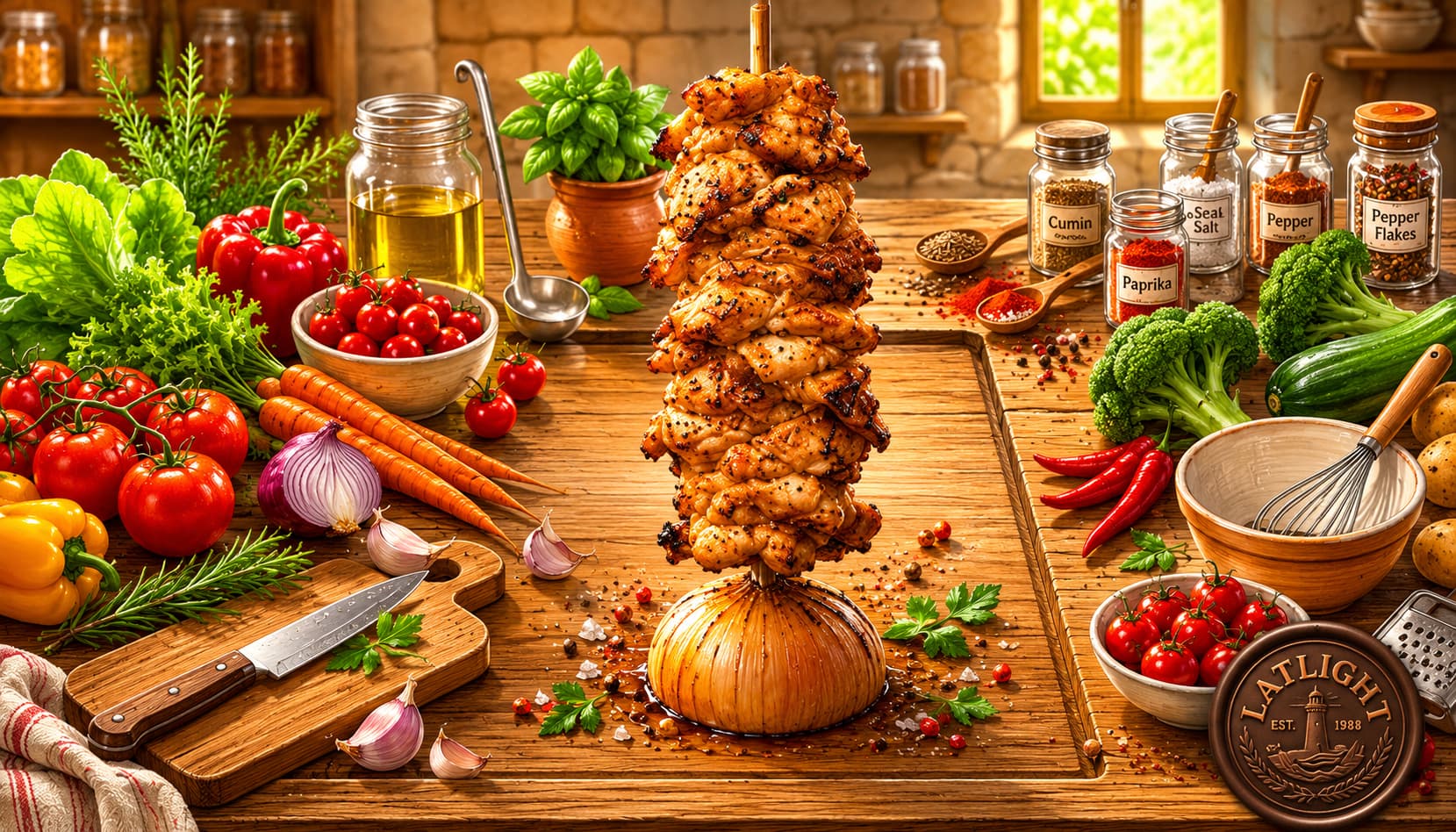
Chicken Kebab On The Onion
1. Marinate:
Coat chicken thighs in yogurt and your favorite spices, then let marinate for 2 hours.
2. Stack:
Build the vertical skewer using an onion base at the bottom, then stack the marinated thighs.
3. Roast:
Roast in the oven at 180°C for 2 hours until tender and deeply golden.
4. Serve:
Carve and serve wrapped in lavash with garlic sauce and your favorite veggies.